

 View a map of past, present, and future construction project locations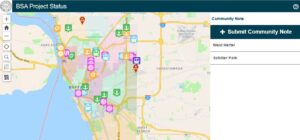
QCCW Vision
Clean waters and a resilient Buffalo.
QCCW Mission
To safeguard public health and the environment while fostering strong community partnerships, creating meaningful workforce opportunities, and driving lasting economic impact for future generations in Buffalo.


What is the Queen City Clean Waters (QCCW) Initiative?
The QCCW Initiative is a long-term plan to make Buffalo’s waterways cleaner, healthier, and safer for everyone who lives, works, and plays here. This Initiative includes upgrades to the Bird Island Wastewater Treatment Facility (WWTF) and the sewer system that will reduce overflows from the City’s sewers and help more wastewater reach the WWTF during wet weather, instead of entering the local waterways. The WWTF then cleans the wastewater to meet water quality standards before it is returned to Buffalo’s waterways.
Why is this work being done?
Hundreds of millions of gallons of storm water mixed with sanitary sewage overflows to the waterways of Western New York during rainfall and snow melt periods each year.
The QCCW Initiative will significantly reduce pollution events to meet regulatory requirements.
How does Queen City Clean Waters impact the City of Buffalo?
The QCCW Initiative will protect public health, local fish and wildlife, and recreational areas. It is a long-term infrastructure investment that will reduce street flooding and basement backups and improve water quality in our local waterways, resulting in healthier ecosystems, increased opportunities for recreational activities, and increased resilience and quality of life for residents.
What types of projects are part of Queen City Clean Waters?
 |
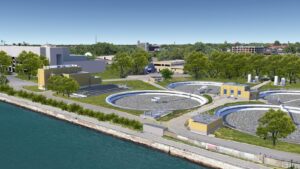
BIRD ISLAND WASTEWATER TREATMENT FACILITY UPGRADES This is a three-phase effort to rehabilitate the secondary system (which provides biological treatment) and the primary system (which provides physical treatment). The secondary system will also be expanded to handle more flow during wet weather. |
 |
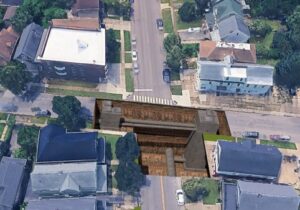
SEWER SYSTEM IMPROVEMENTS Includes sewer separation, sewer replacement/redirection, diversion chamber modifications, and deep sewer interceptors. |
 |
 |
||
 |
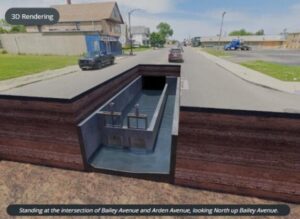
REAL-TIME CONTROL (RTC) A chamber with gates that stores combined sewage temporarily within existing large sewer pipes during storm events. Smart sensors measure flow upstream and downstream to automatically open and close the gates. |
 |
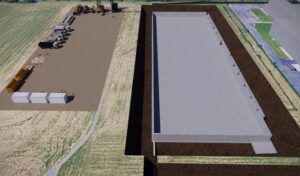
COMBINED SEWER OVERFLOW (CSO) STORAGE A tank and/or large pipe that stores combined sewage temporarily when the sewers are full and then drains when the sewers have space. |
 |
 |
||
 |
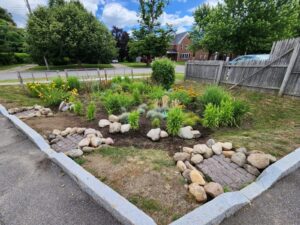
GREEN STORMWATER INFRASTRUCTURE (RAIN CHECK 2.0) Manages rain and snowmelt at its source by holding water near where it falls. This approach reduces flooding and helps protect local waterways. |
||
 |
|||
QCCW Stakeholder Advisory Committee
A Stakeholder Advisory Committee (SAC) will collaborate with Buffalo Sewer to ensure that community perspectives, concerns, and insights are aligned with the planning and implementation of over 50+ projects across the City of Buffalo over the next 15 years. The Committee will play a crucial role in providing a platform for residents to voice their concerns and provide feedback and suggestions on the various projects in communities across the City. The Committee will act as a bridge between the Buffalo Sewer and residents, ensuring that the infrastructure investments reflect the needs and priorities of the community.
The Committee will be comprised of a diverse group of representatives from various groups and organizations who represent the neighborhoods and communities where projects are taking place.
QCCW SAC Organizations & Agencies Currently Represented
QCCW SAC Meeting Notes
2026 Meeting Notes
2025 Meetings Notes
February 2025 | Presentation | Recording
March 2025 | Presentation | Recording
April 2025 | Presentation | Recording
May 2025 | Presentation | Recording
June 2025 | Presentation | Recording
July 2025 | Presentation | Recording
August 2025 | Presentation | Recording
September 2025 | Presentation | Recording